
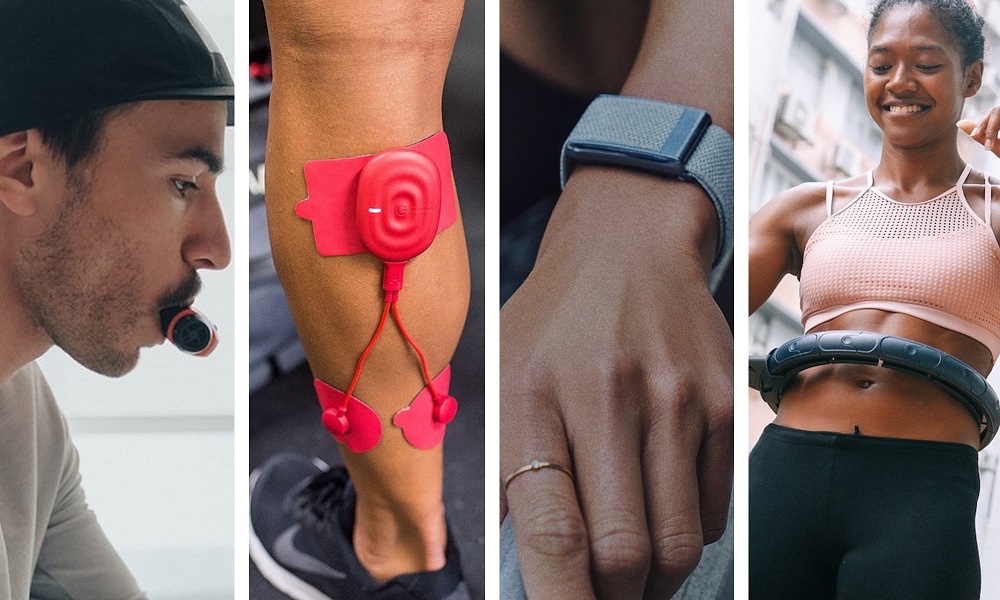
Wearable fitness technology has moved well beyond counting steps and monitoring resting heart rate. Today’s devices track continuous heart rate variability, blood oxygen saturation, skin temperature, respiratory rate, and activity-specific metrics with a level of precision that was previously only available in sports science laboratories. For participants in dynamic, multi-planar exercise formats like trampoline training, this creates interesting opportunities and some notable technical challenges worth understanding.
Anyone who has worn a fitness tracker to a trampoline class singapore session will have noticed that the data it produces looks different from a running or cycling workout. The movement patterns of rebounding, with their rapid vertical accelerations, brief weightless phases, and irregular arm movements, interact with wrist-based sensors in ways that require some understanding to interpret correctly.
What Wearables Actually Measure During Trampoline Training
Modern consumer fitness wearables collect data through several sensor types that work simultaneously to build a picture of physical activity:
- Optical heart rate sensors use photoplethysmography to detect blood volume changes in the wrist capillaries by shining light into the skin and measuring the reflected light pattern, which changes with each heartbeat
- Accelerometers measure movement across three axes and are used to detect step counts, activity intensity, jump height, and general movement patterns
- Gyroscopes measure rotational movement and orientation change throughout activity
- Skin temperature sensors on newer devices track thermoregulatory responses to exercise intensity over time
For trampoline class specifically, the accelerometer and optical heart rate data are the most relevant, and both present specific challenges in this movement environment that are worth knowing about.
The Accelerometer Challenge in Trampoline Training
Accelerometers in wrist-based devices are calibrated primarily around the movement signatures of walking, running, and cycling. These are relatively predictable movement patterns with consistent relationships between wrist movement and physical effort.
Trampoline training generates accelerometer signals that look quite different from these baseline activities. The vertical bounce creates high-amplitude acceleration events that the device’s algorithm may misclassify. Some devices overcount steps during trampoline sessions because the landing impact registers as multiple step events. Others struggle to accurately quantify energy expenditure because the vertical loading pattern falls outside the training data used to develop their calorie estimation algorithms.
More advanced devices with sport-specific activity modes increasingly include trampoline or indoor cardio modes that apply adjusted algorithms to these movement signatures, improving the accuracy of calorie and intensity estimates progressively.
Heart Rate Accuracy During High-Intensity Bouncing
Optical heart rate sensors can experience accuracy issues during high-intensity physical activity due to motion artefact. When the wrist moves rapidly and irregularly, the signal becomes noisier and harder for the device’s algorithm to interpret with precision.
During a trampoline session, the wrist undergoes more varied and rapid movement than during running or cycling, which increases the risk of motion artefact in the heart rate signal. Wearing the device higher on the wrist, on the fleshy part of the lower forearm, and ensuring a snug but not constrictive fit both help minimise this issue during class.
Chest strap heart rate monitors, which use electrical measurement rather than optical sensing, are not affected by motion artefact and provide significantly more accurate data during trampoline training. Athletes who want precise heart rate zone data for interval training purposes are better served by pairing a chest strap with their wrist device during high-intensity sessions.
Metrics That Are Most Useful for Trampoline Class Participants
Despite the accuracy nuances, wearables provide genuinely useful data for trampoline training participants. The most practically valuable metrics include:
- Average and peak heart rate: Even with some inaccuracy, heart rate data gives a useful indication of session intensity and effort level relative to previous sessions
- Heart rate zones: Understanding the proportion of time spent in aerobic versus high-intensity zones helps participants gauge whether their session intensity aligns with their training goals
- Resting heart rate trends: Tracked over weeks of consistent training, a declining resting heart rate indicates improving cardiovascular fitness from regular trampoline class attendance
- Heart rate variability: Available on more advanced devices, HRV tracked over time reflects recovery status and overall training load management quality
- Active calories: While not perfectly accurate for trampoline-specific movement, calorie estimates provide a useful relative measure of session intensity across different workouts
Emerging Technology Relevant to Trampoline Training
Several technology developments are beginning to change how performance data is captured in group fitness environments. Smart trampoline systems embedded with pressure sensors and accelerometers in the mat surface itself can capture jump height, landing force distribution, tempo consistency, and bilateral load asymmetry with far greater accuracy than wrist-based devices. This data is directly relevant to technique development and meaningful performance progression.
Some studios are beginning to integrate heart rate monitoring systems that broadcast member data to a central display, creating a shared performance dashboard visible during class. This approach, borrowed from indoor cycling studios, adds a competitive and accountability dimension to group trampoline sessions that motivates effort and consistency among participants.
TFX Singapore continues to monitor developments in fitness technology and integrates tools that meaningfully enhance the member training experience and instructor coaching capability, rather than adopting technology for novelty alone.
Practical Recommendations for Using Wearables in Trampoline Class
For participants who want to get the most accurate and useful data from their wearable during a trampoline session:
- Select the most specific activity mode available on your device, such as indoor cardio, interval training, or trampoline if the option exists
- Wear the device snugly and position it slightly higher on the wrist than for everyday use
- Use heart rate zone data as the primary performance indicator rather than calorie counts or step totals
- Cross-reference your perceived exertion with heart rate data to develop a more accurate sense of your effort calibration over time
- Track trends across sessions rather than fixating on individual session numbers for more meaningful insights
FAQ
Q: Can my smartwatch accurately count calories burned during a trampoline class? Calorie estimates from wrist-based devices during trampoline training are less accurate than during running or cycling. The unusual movement signature of rebounding sits outside the typical algorithm training data for most consumer devices. Treat calorie data as a relative indicator of effort rather than a precise measurement.
Q: Which fitness trackers handle trampoline class data best? Devices with dedicated indoor cardio or jump training modes, and those that use both accelerometer and optical heart rate data with motion artefact compensation algorithms, tend to perform better. Pairing any wrist device with a chest strap heart rate monitor gives the most accurate cardiovascular data during trampoline sessions.
Q: Is there a way to use wearable data to structure trampoline training progressions? Yes. Monitoring resting heart rate trends, heart rate recovery speed after high-intensity intervals, and overall training load across the week through platforms that aggregate wearable data allows participants to make informed decisions about session frequency and intensity adjustments over time.
Q: Do I need an expensive wearable to benefit from tracking trampoline class performance? Not necessarily. Even mid-range devices with basic heart rate monitoring provide enough data to track session intensity, monitor cardiovascular fitness trends, and guide training decisions meaningfully. The incremental benefit of premium features matters more at advanced training levels than for recreational participants.
